A deposit that posted twice
One company and one bank
The register and the statement still disagree
We clear the duplicate before anyone calls that month finished.
Steven Palmieri, a Tax CFO and the Entrepreneur's CFO, keeps the month you can open, sets up payroll, and prepares the return from those same pages.
Start from this month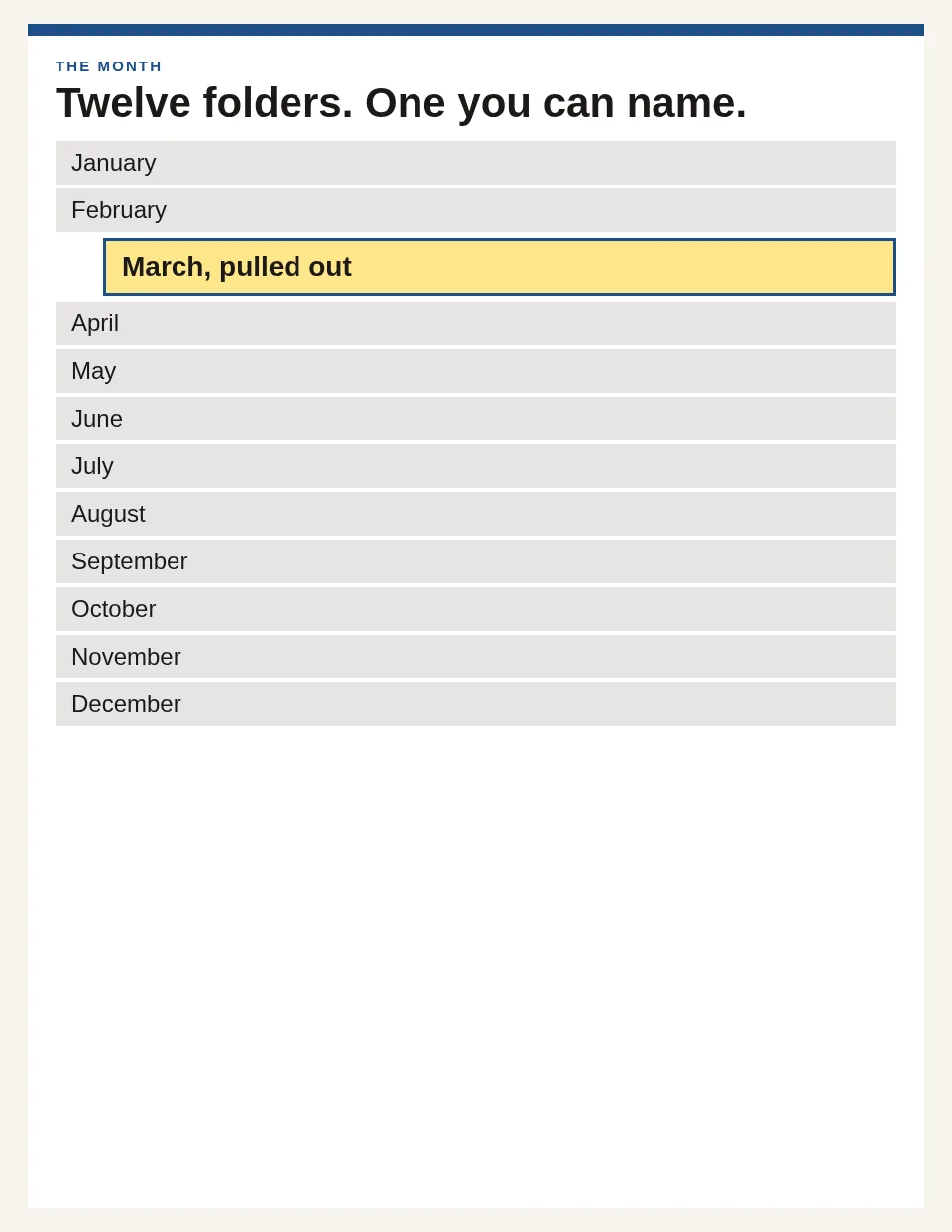

You will be talking to the Steven Palmieri practice.
An accountant can total the bills that already posted and the deposits that already cleared. That count is what already happened. The Tax CFO decides what happens next, which bill gets a home before the tenth, whether owner money stays out of sales, and what October can still change on the return.
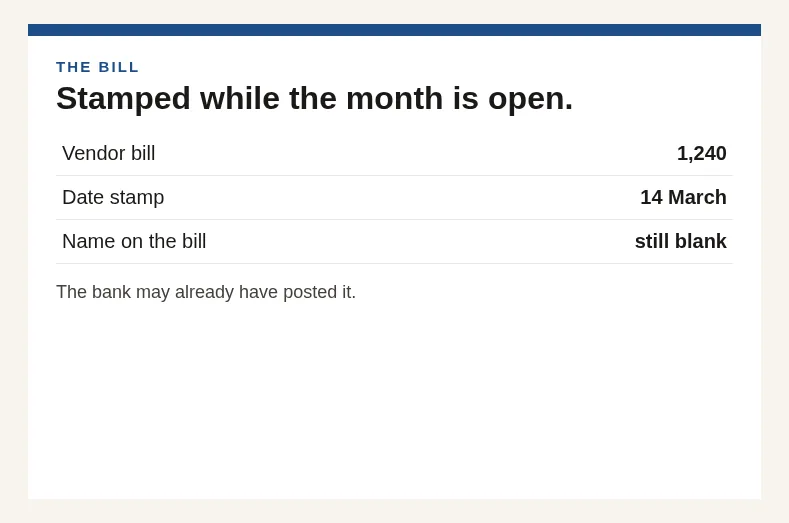
At the kitchen table a vendor bill finally leaves the inbox, and the bank may already have posted it. The bill still needs a name while that month can still be fixed.
Click to see the bills ›Tap to see the bills ›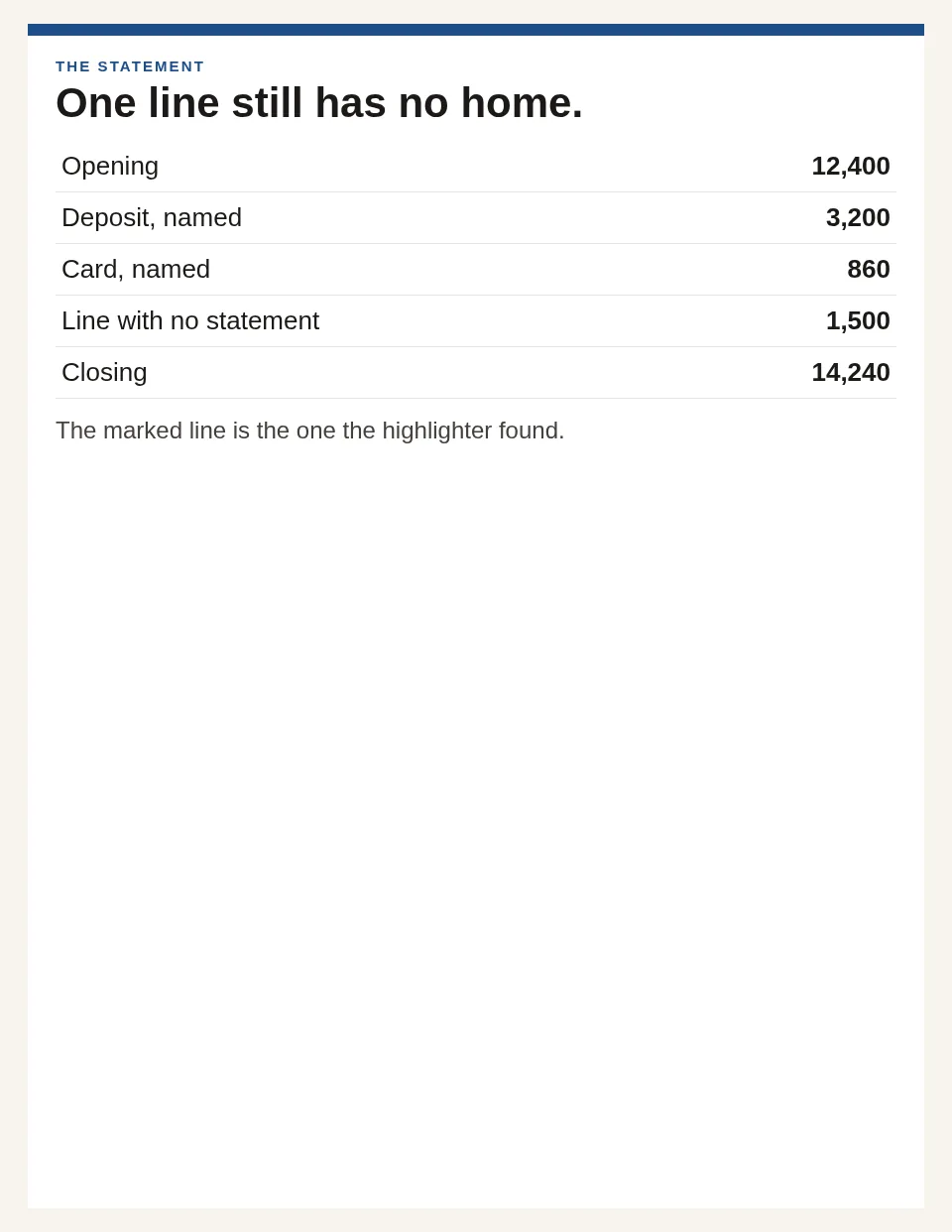
A statement that will not match stops a close cold. We share that pause, then we ask which balance on your page has never had a statement behind it.
Click to see the tie ›Tap to see the tie ›Four federal estimate days sit on every calendar in the country, mid April, mid June, mid September, and mid January. We like a close that has a date everyone can name too.
Click to see the return ›Tap to see the return ›After the shop closes, the drawer and the day's deposits sit on the counter. You hear the quiet. We hear it and start counting which deposits never got a name.
Click to see payday setup ›Tap to see payday setup ›A file that arrives in March can look finished and still be an export. We read it against the bank before anyone treats it as the year.
Click to see the export ›Tap to see the export ›The useful question is what last month produced, not which nouns were on the menu. We answer that with the page you can open.
Click to see the questions ›Tap to see the questions ›Steven Palmieri is the Tax CFO on these pages, the Entrepreneur's CFO. The company can sit anywhere. The call is how we keep the month together. We keep the month with you.
Tell us which month is still open. A sentence is enough.
You will be talking to the Steven Palmieri practice.
A menu can list bookkeeping, payables, receivables, and reporting for years and never show you last month. The useful turn is a date. By the tenth, the bank agrees, ordinary purchases have a home, the bills are entered through the last day, and the money people owe you matches the deposits that actually cleared.
Money the owner put in is marked as owner money, so it never sits inside sales. A feed can post one deposit twice, and the month stays open until that duplicate is gone. Uncleared items older than a season get a decision, still out, void, or issued again, instead of living forever on a list nobody reads.
Federal estimates, when you pay them, sit on four dates a calendar someone will open, mid April, mid June, mid September, and mid January. Sales tax you collected, where a state has a tax, sits in a liability and the twentieth is on that same calendar for most monthly filers. A town rate is copied from the lookup for that town. A guessed rate never goes on the page.
Payroll is set up. Registrations, the provider, and the deposit schedule are put in place. Once setup is done, payday stays with the provider you already run. The return is prepared from the months that already closed, so March is not a second rebuild of the year.
The login stays in your name. When the work stops, the file, the bank connections, and the subscription come back to you. A signed audit, review, or compilation is not part of this. The boundary lives on the disclosures page, in one place.
Full service is a feeling. A package name is a feeling. A PDF emailed in March is a file. None of them say whether the bank matched, whether a holding account is empty, or whether a vendor still has no tax id for the forms that come in January.
We would rather show you one page you can point at than add another noun to the menu. If the honest answer is that the month is already in good shape, we say that on the call.